
Natural Gas Futures Stage Partial Recovery After November Contracts Hit Six-Month Low on Warm Weather Forecasts
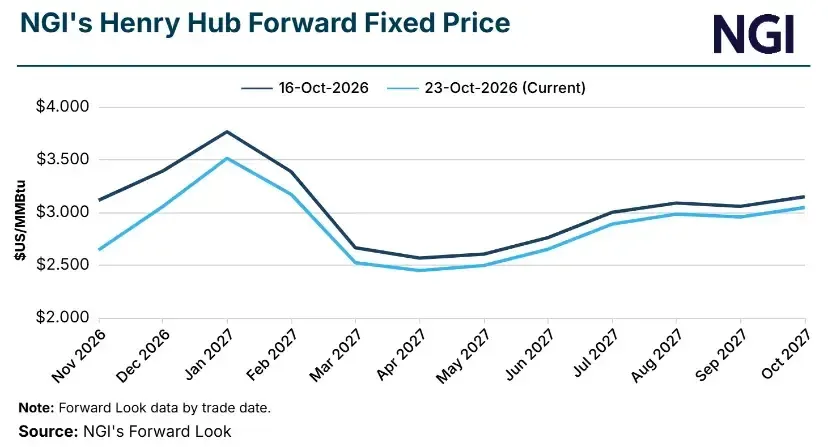
Natural gas futures clawed back much of their early session losses on Monday, staging a notable recovery after November contracts initially plunged to a six-month low. Despite the late-day bounce that helped pare steeper losses, the broader market sentiment remained largely bearish, with most winter strip contracts finishing the session lower. The downward pressure was driven primarily by updated weather forecasts pointing toward unusually mild and above-average temperatures across major heating markets throughout the United States as the winter season approaches.
While the bearish weather outlook dominated the psychological landscape for traders and weighed heavily on winter pricing, underlying market fundamentals offered a layer of crucial support. Traders balancing the incoming warm weather data against robust structural demand factors had to weigh offsetting bullish signals, including strong liquefied natural gas (LNG) feedgas demand, declining pipeline imports from Canada, and a continuation of below-average storage injection figures reported in recent weeks.
The early morning sell-off was sharp and decisive, reflecting the market’s sensitivity to temperature outlooks as the industry transitions into the withdrawal season. November natural gas futures tumbled to their lowest level in half a year, catching some market participants off guard and triggering automatic sell signals before bargain hunting and technical support helped stabilize prices. As the trading day progressed, buyers stepped in to recover a significant portion of the ground lost during the early morning panic, yet the fundamental reality of a potentially delayed heating season kept the pressure on winter delivery months.
At a Glance:
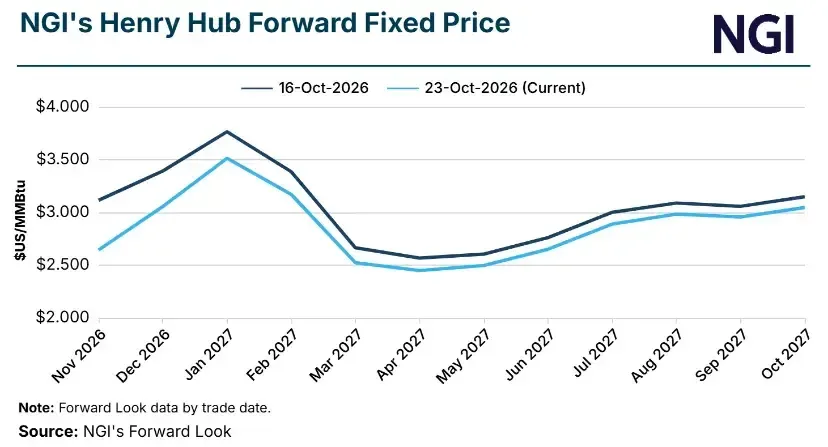
The session underscored the delicate balancing act currently defining North American natural gas markets. On one hand, long-range meteorological models have consistently signaled that major population and heating centers in the Midwest, East Coast, and parts of the South could experience a milder-than-normal start to the winter heating season. In natural gas markets, a lack of early heating demand directly translates to reduced consumption, slower inventory drawdowns, and the potential for a comfortable supply cushion heading into the peak of winter. Because heating load is one of the most critical drivers of winter natural gas pricing, even a minor upward shift in temperature forecasts can trigger widespread liquidation among speculative and commercial market participants.
Conversely, the supply side of the equation continues to present a tighter picture than what might typically be expected during a period of warm weather forecasts. Strong demand from the booming U.S. LNG export sector has provided a constant baseline of consumption, pulling significant volumes of gas away from domestic storage and toward export terminals along the Gulf Coast and other coastal regions. This robust global appetite for American liquefied natural gas keeps a high floor under production requirements and ensures that domestic balances do not become entirely bloated by localized weather anomalies.
Adding to the supportive supply dynamics, pipeline imports of natural gas from Canada have experienced notable declines. Fluctuations in cross-border flows often ripple quickly through regional pricing hubs, and reduced Canadian receipts mean that domestic producers face less competitive pressure from northern supply sources. Furthermore, recent weekly storage reports from the U.S. Energy Information Administration have continued to show injections running below historical averages, suggesting that even ahead of the winter draw season, the pace of inventory accumulation has failed to match the aggressive pace seen in some previous years.
Market analysts note that this tug-of-war between bearish weather catalysts and fundamentally sound supply-demand metrics is likely to dictate trading ranges in the near term. As the market digests the implications of the six-month low for front-month contracts, participants are closely monitoring updated meteorological runs for any signs of shifting polar vortex activity or sudden cold snaps that could rapidly alter the winter narrative. At the same time, the ongoing strength of LNG feedgas deliveries and the trajectory of domestic production metrics will remain critical focal points for traders attempting to gauge whether the current price levels offer attractive entry points or if further downside correction lies ahead for the winter strip.
| Source | : | Finance Poetry |
| Author | : | rifanmuazin |
| Editor | : | Finance Poetry Editorial Team |