
Natural Gas Futures Extend Losses Amid Warm Weather Forecasts and Rising Storage Inventories
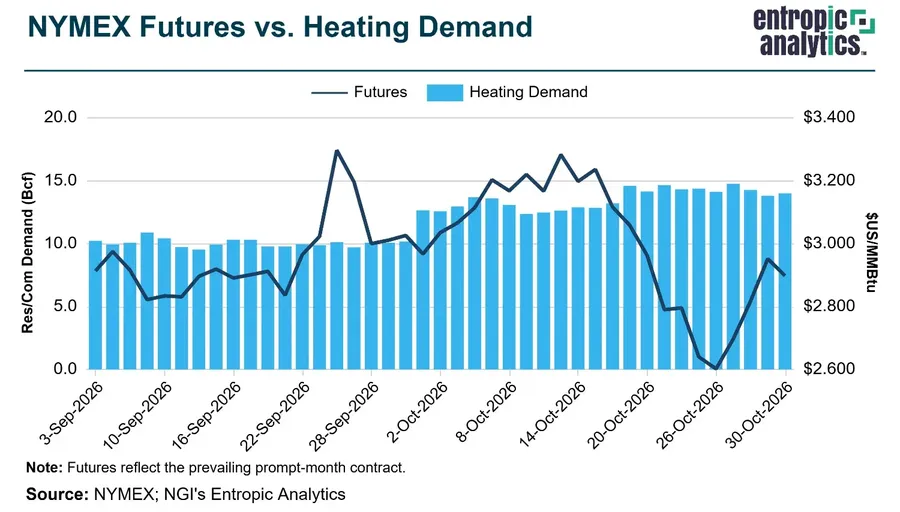
Natural gas futures remained under heavy pressure on Friday, as a combination of milder-than-normal weather outlooks and a larger-than-average storage injection delivered yet another psychological and fundamental blow to market bulls.
The December futures contract spent much of the session struggling to regain footing after briefly sliding below the critical technical threshold of $2.850/MMBtu. Although the contract managed a modest recovery from its intraday lows, the broader market structure remained firmly on the defensive. Traders and analysts pointed to the growing prospect of additional domestic supply returning to the market before any meaningful, sustained winter heating demand finally arrives, creating a bearish overhang that has stymied attempts at a meaningful price recovery.
The latest round of selling underscores a persistent challenge for natural gas markets as the industry transitions from the shoulder months into the late-autumn and early-winter periods. Futures prices have faced recurring downward momentum in recent weeks, driven largely by weather models shifting toward warmer projections across key population centers in the United States. When heating demand fails to materialize on schedule, utilities and storage operators are left with ample inventories that continue to sit well above historical seasonal averages.
At a Glance:
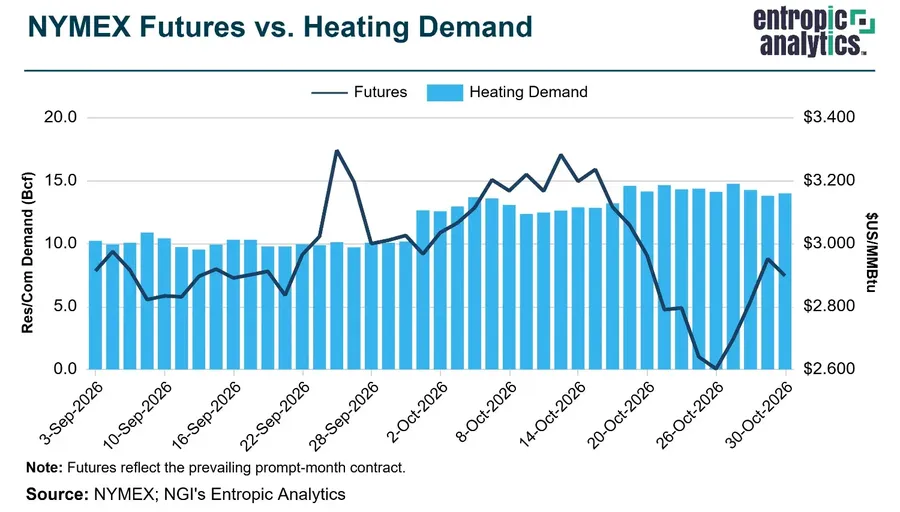
The fundamental pressures weighing on the market have centered around two primary drivers: persistent warmth in near-term meteorological forecasts and robust inventory builds reported by federal regulators. The U.S. Energy Information Administration (EIA) recently reported a storage injection that outpaced historical norms for this time of year, signaling that supply remains more than adequate to meet immediate domestic consumption needs.
This supply-demand imbalance has kept the front-month contract sensitive to any bearish tilt in weather forecasting models. While market participants acknowledge that true winter weather patterns can shift rapidly once December and January arrive, the current reality on the ground is one of abundant supply and lackluster consumption from the residential and commercial sectors.
Market observers note that the December contract’s dip below $2.850/MMBtu triggered algorithmic selling and cautious risk management among institutional investors. Even though the market mounted a minor recovery later in the day, the broader sentiment remains cautious. Bulls are finding it increasingly difficult to mount a sustained offensive when fundamental indicators point to comfortable inventory cushions and a lack of early-season heating degree days.
Compounding the issue is the steady pace of domestic production. Producers have managed to maintain robust output levels, ensuring that pipelines remain well-supplied. As a result, any weather-driven rallies have tended to be short-lived, quickly met by profit-taking or aggressive hedging from commercial entities looking to lock in prices before deeper winter volatility sets in.
As the market looks ahead, traders will continue to monitor updated meteorological runs and weekly storage data for signs of a shifting fundamental balance. Until sustained cold weather forces a significant drawdown in natural gas inventories, the market appears poised to remain under pressure, with rallies likely to encounter strong resistance from well-supplied physical markets.
| Source | : | Finance Poetry |
| Author | : | rifanmuazin |
| Editor | : | Finance Poetry Editorial Team |