
French High School Students Resume Limited Protests Following Holiday Break
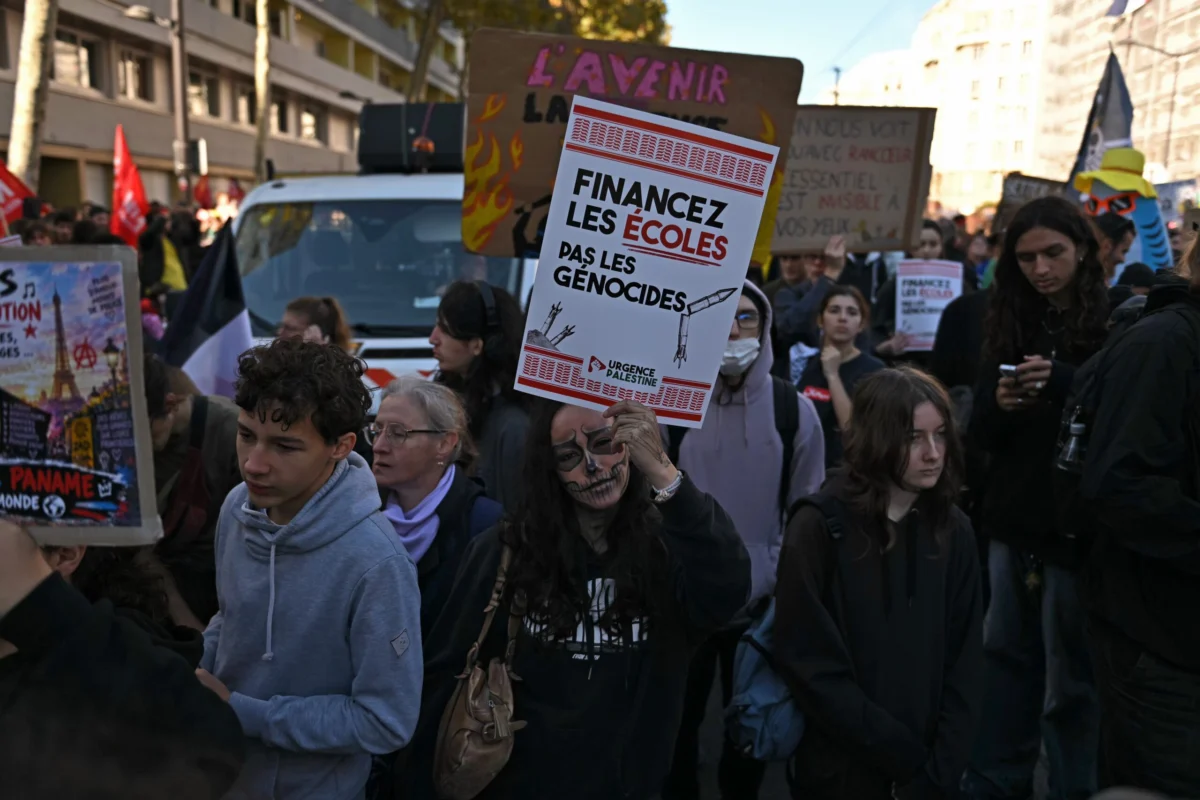
High school students across France have resumed demonstrations following their two-week holiday break, though the scale of the unrest has dropped significantly compared to the widespread disruptions seen in previous weeks.
According to data released by the Ministry of Education, exactly 41 high schools were blockaded on Monday morning. This figure accounts for approximately one percent of the country’s total network of roughly 3,700 high schools, based on figures provided by the French public broadcaster Franceinfo.
The renewed demonstrations saw pockets of students attempting to blockade educational facilities in major urban centers, including Paris, Marseille, and Rennes, according to reports from the Reuters news agency. These localized actions stand in stark contrast to the weeks leading up to the holiday break, when hundreds of institutions were simultaneously blockaded as part of a rapidly escalating nationwide youth movement.
Government officials were quick to downplay the scope of Monday’s actions while reiterating their stance on the legality of such disruptions. Education Minister Edouard Geffray addressed the situation during an interview with France Inter radio, describing the demonstrations as statistically minor.
"In terms of blockades, or attempted blockades, the phenomenon is very marginal. We’re talking about a handful of units, a few individual schools," Geffray said.
While emphasizing that the right to protest remains a protected freedom in France, the education minister drew a firm line regarding actions that impede the functioning of public institutions. He stressed that preventing access to school grounds constitutes an illegal act that disrupts the educational futures of young people.
"The school year is now at risk for several hundred thousand pupils and we can’t allow that," Geffray stated, as reported by the state public news service Franceinfo.
The current wave of student activism traces its origins back to September, when initial demonstrations broke out in the suburbs of Paris before rapidly propagating across the country. What began as a sector-specific movement focused strictly on educational grievances eventually broadened in scope last month. The core of the public anger expanded to encompass broader socioeconomic concerns, particularly the rising cost of living, which subsequently drew in trade unionists and external activists seeking to amplify the pressure on the administration.
For President Emmanuel Macron’s minority government, the unrest has presented a profound political and social test. In several cities, the demonstrations devolved into violent clashes between protesters and police forces, accompanied by instances of urban rioting and the looting of commercial shops. The convergence of student demands with broader labor and economic grievances transformed localized school grievances into a national crisis that challenged the stability of the government’s domestic agenda.
At the heart of the student movement are long-standing grievances regarding the state of public education infrastructure and the mechanics of the higher education system. Demonstrators have consistently demanded comprehensive funding for the renovation of aging school buildings, the hiring of additional teaching staff to reduce overcrowded classrooms, and an increase in overall university capacity. Furthermore, students have called for a complete overhaul of the national university admissions system, which many participants argue is socially unfair and creates arbitrary barriers to higher education.
In an effort to defuse the tensions and address the core demands of the protesters, the government announced a series of major concessions last week. According to reports from Franceinfo, the administration outlined plans for the gradual replacement of the contentious Parcoursup admissions platform by the year 2028. Additionally, the government cancelled previously planned cuts to education sector jobs, promised the creation of 500 additional staff posts, and introduced a strict cap limiting class sizes to a maximum of 28 pupils during the first year of high school.
Financial commitments were also a key component of the government’s package. Authorities pledged a total of 4 billion euros, equivalent to approximately $4.47 billion, dedicated entirely to the renovation and modernization of school facilities across the nation. To address bottlenecks in higher education, the government also promised the creation of 15,000 new places in universities and higher education institutions.
Despite these substantial concessions, student representatives and union leaders immediately deemed the government’s offers insufficient to meet their core demands, vowing to maintain their pressure through continued mobilization and direct action.
"Of course we’re calling for a blockade," said Pierre Sourzat, president of the student organization Les Lyceens!, speaking on Sunday according to a report by France 24.
Building on this resolve, organizations such as the Union Syndicale Lyceenne and the broader Student Union have issued formal calls for further blockades and demonstrations scheduled for Tuesday and Thursday. Meanwhile, the UNEF student union has designated Tuesday as a "black day" for higher education, urging students to organize blockades and disrupt normal operations across universities nationwide.
| Source | : | Finance Poetry |
| Author | : | rifanmuazin |
| Editor | : | Finance Poetry Editorial Team |