
Fed Officials Clash in Public as Chair Kevin Warsh Shuns Forward Guidance Amid Persistent Inflation
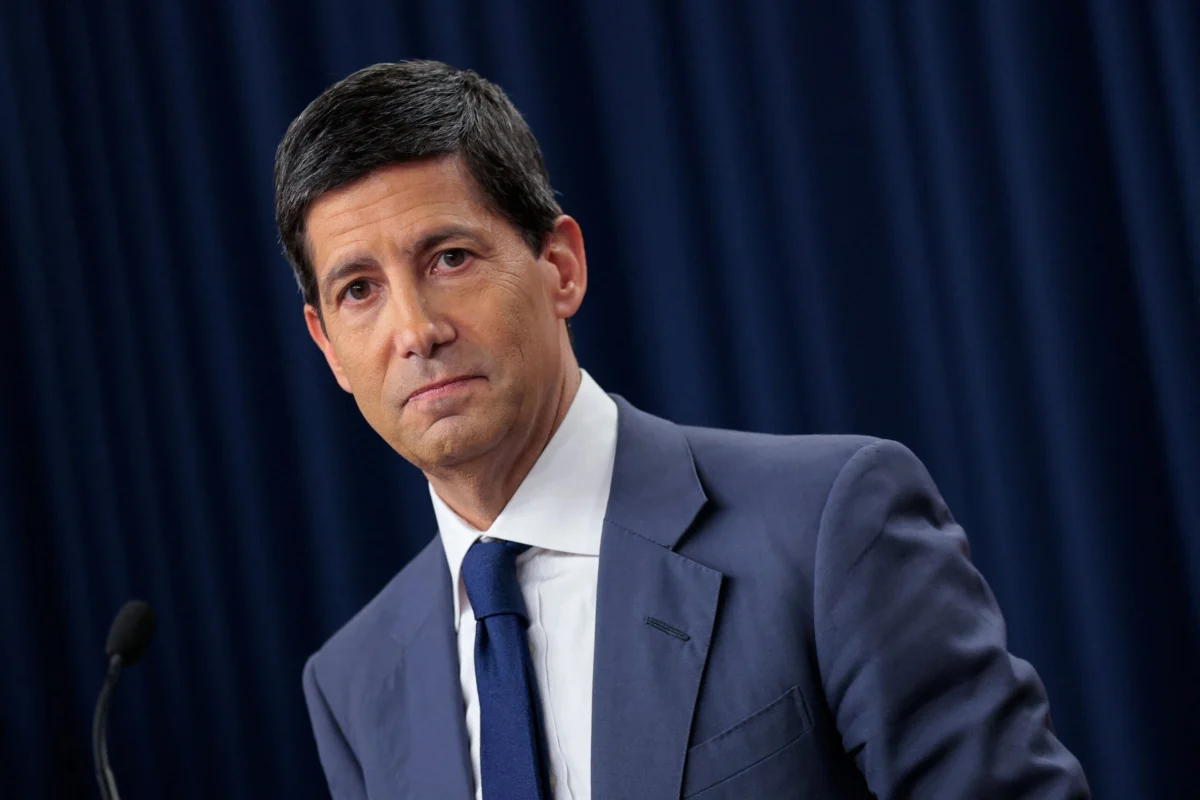
Six months into his tenure as Federal Reserve chairman, Kevin Warsh has maintained a remarkably disciplined silence regarding the future trajectory of monetary policy and interest rates. Yet, far from maintaining calm, his reticence has created a vacuum that his fellow central bankers have been only too eager to fill. Across the central bank, Federal Reserve officials have rushed to the public microphones in recent weeks, voicing sometimes sharp and conflicting opinions on how the institution should manage an inflation bug that the broader U.S. economy simply cannot seem to shake.
While a broad consensus has emerged among policymakers that benchmark interest rates should be raised—and soon—the prescription for how aggressively to act remains deeply divided. Some regional presidents and governors are comfortable with a measured pace of hikes as economic conditions unfold. Others, however, are pushing for a much faster and more forceful tightening cycle. Notably, Federal Reserve Governor Christopher Waller and St. Louis Fed President Alberto Musalem have openly entertained the possibility of more aggressive rate hikes delivered in a shorter timeframe to clamp down on stubborn price pressures.
Operating largely on the sidelines of this public debate is Chairman Warsh himself. The new Fed chief has made no secret of his disdain for forward guidance, a communication tool heavily relied upon by his predecessors. Warsh has repeatedly argued that locking the central bank into predictable paths of rate adjustments effectively handcuffs policymakers long before they actually have to sit down and make a binding decision based on incoming economic data.
Yet, Warsh’s personal aversion to signaling has done little to quiet the rest of the 18 officials who participate in Federal Open Market Committee (FOMC) meetings. In fact, according to a recent comprehensive analysis by Bank of America, there has been a dramatic surge in so-called Fedspeak. The volume of public commentary over a recent two-week period surpassed any comparable timeframe seen since the beginning of 2025, underscoring a growing cacophony of voices at a critical juncture for the U.S. economy.
"Warsh’s refusal to guide markets might be encouraging the rest of the FOMC to speak more, not less," Bank of America economist Aditya Bhave observed in a note to clients.

Bhave pointed out that while there is always a natural and healthy range of views across the 19 FOMC participants, it is typically the role of the Chairman to weigh in publicly, signaling to the financial markets whether the hawkish faction or the dovish faction is currently in ascendence. Absent this centralized leadership and clear directional steer, both sides appear to feel heavily incentivized to speak more frequently and with greater force to shape market expectations. This increasingly vocal debate arrives at a critical crossroad for the Fed, carrying myriad policy implications for the labor market, corporate America, and consumers alike.
Threading a needle
The consequences of this communicative vacuum are becoming increasingly visible inside the central bank. Bhave noted what he described as a "deepening divide" within the FOMC. Looking back, the Fed’s controversial decision to keep its benchmark interest rate unchanged at its October meeting "increasingly looks like a mistake," according to Bhave, and as a direct consequence, "the hawks have been very vocal of late." Leading that charge is Governor Waller, who has openly floated the prospect of lifting the federal funds rate by half a percentage point when the committee gathers for its next scheduled policy meeting in December.
Minutes from that pivotal October FOMC meeting offer a fascinating window into the internal tension, particularly regarding Chairman Warsh’s firm refusal to provide forward-looking policy guidance. The official meeting summary revealed that some officials who had originally advocated for an immediate rate increase in October "could have supported no change in the federal funds rate provided that it was clearly understood by market participants that further tightening was likely." That conditional stance points directly toward the kind of explicit forward guidance that Warsh has stubbornly insisted the Fed must avoid.
The minutes "revealed that some officials favoring a hike would have accepted a hold if the Fed had clearly communicated further tightening," noted market veteran Ed Yardeni. "Warsh’s communication philosophy may thus be limiting the Fed’s flexibility precisely when it needs it most."
Other officials are attempting to navigate this delicate communications landscape in real time. Cleveland Fed President Beth Hammack, who famously dissented against the October pause in favor of a quarter-point rate hike, recently tried to walk a fine line during a public appearance. Prefacing her observations about the potential path of monetary policy, Hammack was careful to frame her thoughts carefully.

"Those are not promises. Those are not commitments. They’re not forward guidance, which is a hot-button topic. But what they are are a conditional set of expectations of where I think the economy can go, based on what I’m seeing," Hammack told audiences.
Hammack’s remarks illustrate the difficult needle that Fed officials have been desperately trying to thread: maintaining transparency about their analytical thinking without appearing locked into a rigid future policy course that rapidly shifting economic conditions could quickly render obsolete.
During a public address, Chicago Fed President Austan Goolsbee framed the ongoing philosophical argument squarely around the concept of central bank credibility.
"I am sympathetic to the view that [Warsh] has expressed that let’s not be so, in our language, forward guidance-oriented, saying here is what I think rates are going to be at the next meeting," Goolsbee said, characterizing such definitive pronouncements as "falsely precise."
However, Goolsbee was quick to separate the hazards of rigid forward guidance from the essential requirement of institutional transparency.
"I think central banks should be careful about doing anything that undermines credibility," Goolsbee added. "That said, I also think that it’s pretty important [that] each person who sits around that table explain how they see the world. What do you see in business conditions? You don’t want to surprise everybody."

Taking a slightly different tactical approach, Philadelphia Fed President Anna Paulson used a speech dedicated to policy communication to argue that financial markets are entirely capable of figuring out where policymakers are headed on their own, provided they deeply understand how macroeconomic developments will influence upcoming decisions. Paulson also offered a staunch defense of the wide variety of diverse voices emanating from the central bank.
"Volume is not the same as clarity," Paulson said. "The measure is not how much we say. It is whether we are understood." She argued that a healthy mixture of different viewpoints "guards against any single communication becoming the only one that matters."
Markets take their own view
Financial markets, meanwhile, have taken this dizzying array of Fed communications and interpreted it through a decidedly hawkish lens. According to the CME Group’s FedWatch tool, traders are currently pricing in a 100% probability of at least a quarter-percentage-point rate hike at the December meeting, alongside a small but notable probability that the central bank might opt for a more aggressive half-point move. From there, prevailing market odds point strongly toward a follow-up rate increase in January, potentially followed by another tightening move before the close of 2027.
These expectations persist even as economic indicators present a complex picture. Current inflation metrics continue to hover above 3%, remaining uncomfortably far from the Federal Reserve’s official 2.0% target. Yet, ironically, market-based measures of longer-term inflation expectations have actually declined. Five-year forward inflation expectations, as tracked through the Treasury market, have drifted down to their lowest levels since April. This divergence suggests that investors may feel increasingly confident that inflation will eventually subside over the long run, even as current policymakers issue stark warnings that near-term price pressures remain stubbornly elevated.
Nevertheless, a fractured and sometimes sclerotic communications strategy from the central bank, set against a backdrop of volatile economic and geopolitical currents, could carry unintended risks for financial stability.

"The result of this back-and-forth is undue rates volatility in already turbulent times," warned Bank of America’s Bhave.
For his part, Chairman Warsh appears entirely unperturbed by the public debate, reportedly advocating for a "family fight" atmosphere inside the central bank. He has argued that competing viewpoints and internal disagreements deserve a full, unvarnished airing as the committee works methodically toward its final policy decisions.
"There are benefits to shaping the market’s future expectations. Perhaps this is part of the ‘family fight’ that Warsh keeps referencing in his pressers," said Tom Graff, chief investment officer at advisory firm Facet. "That family fight seems to be happening out in public."
| Source | : | Finance Poetry |
| Author | : | rifanmuazin |
| Editor | : | Finance Poetry Editorial Team |