
Nvidia Defies Turmoil as Interim CEO Colette Kress Reports Record Growth and Unshakable Demand
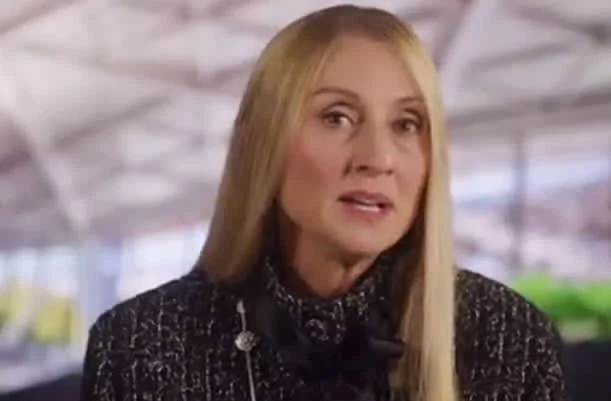
Just five days after Jensen Huang resigned from the company he co-founded 33 years ago under a heavy cloud of scandal, a nervous base of shareholders eagerly awaited Colette Kress’s first public appearance as interim CEO. The sudden exit of one of the most iconic and singular figures in the artificial intelligence revolution had left Wall Street questioning the immediate trajectory of the world’s most dominant chipmaker. However, following Nvidia’s better-than-expected earnings report on Tuesday, Kress offered substantial relief to investors, at least temporarily, by proclaiming on a call with analysts that customers remain fully onboard and that there is zero slippage in demand.
To reinforce the stability of the supply chain, Kress highlighted that leadership from Nvidia’s most critical manufacturing partner, Taiwan Semiconductor Manufacturing Company (TSMC), visited company offices earlier in the week.
"We’ve engaged with our customers, we’ve engaged with our suppliers, our partners, they’re all 100% behind us," Kress said during the earnings call. "Customers have expressed their support to the business outlook and helping us through that."
While Huang was a towering figure with a commanding global presence, Nvidia remains the undeniable center of gravity for the entire artificial intelligence ecosystem. A wide array of customers, ranging from traditional hyperscalers and neoclouds to frontier labs like OpenAI and Anthropic, continue to rely heavily on its cutting-edge technology and capital to fuel their infrastructure expansions.
Nvidia shares climbed nearly 5% in extended trading on Tuesday following the better-than-expected earnings release and strong forward guidance. Even with this positive post-earnings bounce, the stock remains caught in a deep slump, having suffered a 24% drop earlier in the month. That downward pressure has been driven by broader market anxieties regarding a potential slowdown in the aggressive AI buildout, a shifting political landscape in Washington, D.C., and the sudden, unprecedented turmoil at the top of the corporate hierarchy.

Despite all of those macroeconomic headwinds and what Nvidia formally described as an "unexpected transition" in leadership, the underlying business is experiencing a historic boom. Revenue more than doubled in the latest quarter to reach $115.84 billion. Looking ahead, Nvidia projected roughly 90% revenue growth for the current period, bringing expected figures to about $130 billion.
More importantly, Kress revealed that the 70% growth forecast for the upcoming fiscal year, which management had offered over the summer, was actually too conservative. The company’s new official projection stands at an astonishing 75%. This extraordinary momentum is taking place at a corporation whose revenue has multiplied by approximately 15-fold since the watershed public launch of ChatGPT in late 2022.
Even though Huang is gone, the market’s appetite for advanced computation has not wavered. "Demand did not leave with him," Yorkville Ives analyst Dan Ives noted in a research note published immediately following the earnings report.
Kress maintained her deeply optimistic tone during a subsequent television appearance on CNBC’s "Mad Money," speaking with host Jim Cramer following the analyst call.
"The most important thing that we have been seeing is continuing growth in terms of the demand that’s out there," she told Cramer, emphasizing that the fundamental drivers of the business remain untouched by executive turnover.
Looking to the future

During the earnings call, Kress also addressed shareholder returns, confirming that Nvidia’s stepped-up share buyback program, which was originally announced back in September, remains entirely on track. She verified that the board of directors had formally added $150 billion to the company’s existing authorization for share repurchases, signaling supreme confidence in long-term cash flow generation.
It is clear that the burden of leadership is not resting entirely on Kress alone. The consistent message echoed throughout the earnings call was that Nvidia is actively organizing and preparing for life after Jensen Huang.
Harvey Jones, the newly appointed chair of Nvidia’s board of directors, opened the earnings call by providing the first official explanation for Huang’s abrupt departure. Jones stated that Huang had resigned following the "disclosure of personal behavior inconsistent with the company’s code of conduct, standards and cultural norms." This marked the first instance in which the board gave a clear reason for his sudden removal. A day earlier, reports confirmed that Nvidia’s board was not considering bringing Huang back as CEO under any circumstances.
Addressing operational continuity, Kress assured stakeholders that it is very much "business as usual" at the corporate headquarters. In a formal statement, she reiterated that the company’s hardware and software roadmap is completely "on track," indicating that no alterations have been made to future chips and systems currently winding their way through research and development. Furthermore, Nvidia highlighted that its next-generation Vera Rubin AI system is already off to an "extraordinary start," pulling in an impressive $20 billion in sales during its debut quarter.
However, Kress did signal a strategic shift in one specific area: the company’s willingness to act as a financial backstop for emerging ecosystem projects. She noted that Nvidia is adopting a much more "disciplined" approach when evaluating how it thinks about financing smaller startups and newer ventures.
"There’s a lot of discussion internally with a lot of the teams on what we think are the best ones that we want to do," Kress told Cramer during their interview. "We’re going to continue down that path to make sure we choose the right investments for us to work through going forward."

Despite the bullish financial results, plenty of significant questions continue to hover over the company.
Nvidia announced that its official quarterly regulatory filing would be published in the "coming weeks," deviating from its usual practice of releasing the document on the exact same day as the earnings announcement. Furthermore, during the Q&A session with analysts, neither Kress nor Jones addressed the mounting avalanche of federal investigations and congressional hearings in Washington. These inquiries are currently looking into allegations that Nvidia may have artificially boosted its reported revenue by selling chips to intermediate companies acting as passthroughs for ultimate buyers in mainland China.
The topic of China was only raised twice during the entire call. Kress disclosed that Nvidia had successfully sold approximately $2.4 billion worth of approved data center products to the Chinese market during the quarter, but noted that the company had officially ceased selling licensed Hopper-generation chips to the region.
Kress also pointed out that sweeping new trade restrictions recently released by the U.S. Commerce Department will effectively cut off Chinese entities from renting Nvidia-powered infrastructure through foreign cloud providers.
Even with these regulatory roadblocks and geopolitical tensions, company executives insisted that nothing is slowing down the firm’s broader expansion.
"Our momentum is real. Our demand is accelerating. Our supply is growing. Our customers and our partners are with us and employees are committed," Kress said as she signed off from the earnings call. "We’ve got this."
| Source | : | Finance Poetry |
| Author | : | rifanmuazin |
| Editor | : | Finance Poetry Editorial Team |