
PHP Foundation Issues Security Patches for 18 Vulnerabilities Amid Heightened Threat Landscape
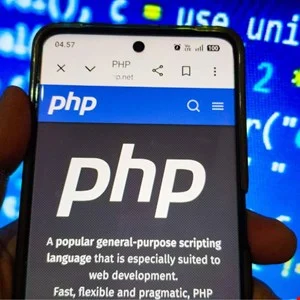
The PHP Foundation has officially released a comprehensive set of security patches addressing 18 distinct vulnerabilities across all supported versions of the widely used server-side scripting language. Among the vulnerabilities identified in this latest security update, seven have been categorized as critical, necessitating immediate attention from system administrators and developers worldwide. While the PHP Foundation notes that many of these flaws require specific, non-default configurations or uncommon server setups to be successfully exploited, the sheer volume of the release underscores the ongoing challenges in maintaining the security posture of the vast PHP ecosystem.
This major security update arrives just one month after the cybersecurity community was rocked by the disclosure of two high-severity flaws, tracked as CVE-2026-109618 and CVE-2026-109619. Collectively dubbed "PHP2Shell," these vulnerabilities were quickly weaponized by threat actors, moving from theoretical research to active, real-world exploitation in a matter of weeks. The rapid transition from disclosure to mass exploitation demonstrated the grave risks posed by unpatched PHP environments, particularly those exposed to the public internet.
The aftermath of the PHP2Shell disclosure served as a stark reminder of the potential for collateral damage when critical vulnerabilities remain unaddressed. Security researchers and vendors reported widespread campaigns targeting internet-facing systems. For instance, Check Point documented a sustained effort by attackers to compromise its own security gateways starting in late October 2026. These sophisticated attacks were not limited to simple data exfiltration; they involved the deployment of persistent backdoors and the installation of destructive tools specifically designed to target and compromise VMware ESXi virtualization servers. Similar patterns of exploitation were observed against Palo Alto Networks firewalls, where attackers sought to leverage exposed administrative interfaces to gain unauthorized control over network infrastructure.
The current update also includes a focus on mitigating a remote code execution (RCE) vulnerability in session upload progress, tracked as CVE-2026-115560. Originally disclosed by the PHP team on October 23—a mere two days after the emergency patches for the PHP2Shell flaws were released—this vulnerability highlights the complexity of the current threat environment. Although experts have noted that triggering this specific exploit requires a highly nuanced and unlikely combination of environmental conditions, the inclusion of a patch for it in this cycle reflects a proactive approach to closing even the most narrow attack vectors.
PHP Session Handling Flaws Enable Remote Code Execution
Among the most significant revelations in the November 19 update is a critical vulnerability dubbed "PHPAfterShell" and formally tracked as CVE-2026-126714. This flaw represents a sophisticated threat to server integrity and was identified by the security firm Depthfirst, which utilized advanced AI frontier models specifically tuned for cybersecurity research and automated vulnerability discovery.
The vulnerability is deeply embedded within PHP’s session handling mechanism, specifically when configured for file-based storage, which remains the default setting for the vast majority of PHP installations (using the session.save_handler = files directive). By manipulating the session management process during the precise window of a file upload, an attacker can effectively deceive the server, forcing it to execute arbitrary, attacker-supplied code.
The implications of a successful exploit are severe. Should an attacker manage to weaponize CVE-2026-126714, they could gain unauthorized access to highly sensitive information, including user login credentials, proprietary customer records, and internal application data. Beyond simple data theft, the ability to modify session data grants an attacker the power to masquerade as legitimate users, spy on active visitors, or cause significant operational disruption by corrupting the affected service. The discovery of PHPAfterShell serves as a reminder that even foundational components like session management can contain deep-seated vulnerabilities that remain hidden until rigorous, AI-driven analysis is applied.
PHP Security Patches Address 16 Additional Vulnerabilities
The security update released on November 19 extends well beyond the critical PHPAfterShell flaw. In total, the release addresses 16 additional vulnerabilities, rounding out a comprehensive effort to harden the PHP language against various forms of exploitation. While the full list of these vulnerabilities covers a range of technical issues, the collective effort to patch them demonstrates the PHP Foundation’s commitment to maintaining a robust and secure development platform.
The release of these patches is synchronized with the latest scheduled maintenance updates for several active PHP versions, including 8.2.36, 8.3.37, 8.4.28, 8.5.13, and the latest iteration, 8.6. By bundling security fixes into the regular four-week release cycle, the PHP team aims to streamline the remediation process for administrators who are already accustomed to managing these periodic updates. The PHP Foundation provided advance warning of these vulnerabilities on November 18, giving IT teams and security professionals a vital window to prepare their environments for the necessary upgrades. The consensus among security experts is that users should prioritize these updates immediately upon deployment to ensure that their systems are not left exposed to known, patched flaws.
PHP Ecosystem Projects Prepare Security Updates
The impact of these security updates extends far beyond the core PHP language. Because PHP serves as the backbone for a massive portion of the modern web, the release of patches triggers a cascading series of actions across the entire software ecosystem. Maintainers of open-source projects, frameworks, and distribution platforms have been working in lockstep with The PHP Foundation to integrate these fixes into their respective software versions, ensuring that downstream users can apply protections with minimal friction.
The reaction from major ecosystem players has been swift. Kevin Dunglas, the creator of FrankenPHP—a high-performance application server built on top of the Caddy web server—publicly confirmed that his team is coordinating closely with both The PHP Foundation and the Docker community. This collaboration is focused on delivering updated builds, including static binaries, RPM and DEB packages, Homebrew packages, and Docker images tailored for Debian and Alpine Linux, as soon as the patched versions of PHP become available. This level of coordination is critical for minimizing the "patch gap" that often exists between the release of a vulnerability fix and its actual implementation in production environments.
Similarly, the Laravel framework, which is arguably the most popular open-source PHP framework for building modern web applications and APIs, has signaled a proactive stance regarding the new updates. The Laravel team announced that they are actively working on a comprehensive remediation plan. This plan is designed to safeguard applications that rely on the framework, particularly those running across Laravel’s own managed hosting and deployment services. By taking these steps, the framework maintainers are helping to ensure that the security of individual applications is bolstered even before manual intervention by every end-user.
As the industry continues to grapple with an evolving threat landscape, the collaborative response to this November security update highlights the maturation of the PHP ecosystem. The combination of early warnings, coordinated distribution across packaging systems, and rapid response plans from major framework providers provides a model for how complex, widely distributed technologies can manage security risks at scale. For the thousands of businesses and individual developers relying on PHP, the path forward is clear: prompt evaluation and application of these updates remains the single most effective defense against the sophisticated, automated, and increasingly common exploitation attempts that characterize the current digital environment.
| Source | : | Finance Poetry |
| Author | : | rifanmuazin |
| Editor | : | Finance Poetry Editorial Team |