
Spanish Rescuers Deploy to Canary Islands as Hundreds of Migrants Arrive Following Dangerous Atlantic Crossings
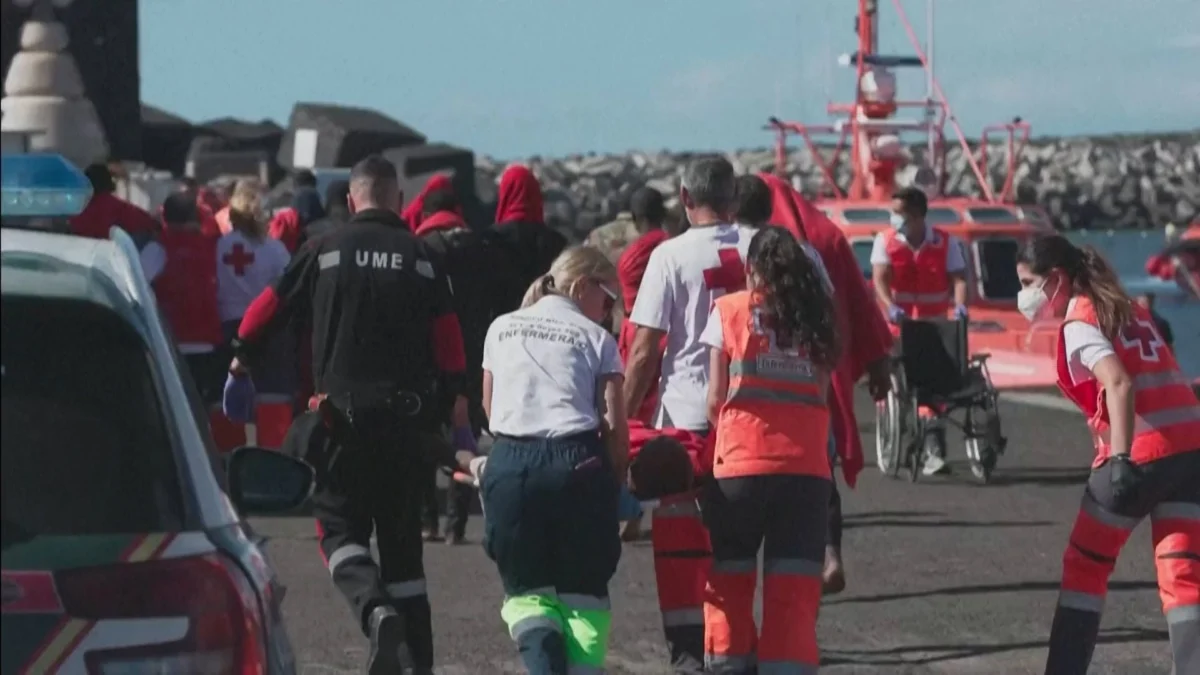
Spain has deployed its elite Military Emergencies Unit to the remote island of El Hierro to provide urgent medical treatment and humanitarian assistance to hundreds of migrants who have arrived after completing the perilous Atlantic crossing from the coast of West Africa. The sudden and intense surge in maritime arrivals has overwhelmed local resources, prompting the island’s government to issue an urgent and widespread appeal for immediate national and international support.
The deployment marks a significant escalation in Spain’s response to the continuous migratory pressure affecting its southernmost territories. According to reports published on November 27, 2026, the arrival of boats carrying large numbers of individuals has placed an unprecedented strain on the infrastructure of El Hierro, the smallest and most westerly of the Canary Islands. The local administration has stated that its existing public services, healthcare facilities, and temporary reception centers are operating far beyond their intended capacities, creating an urgent need for specialized federal intervention.
In response to the crisis, the Military Emergencies Unit—commonly known by its Spanish acronym UME—was dispatched to the island to assist local emergency services, medical personnel, and humanitarian organizations. Operating directly on the shores where the boats have been landing, military specialists have set up triage areas and emergency medical tents to evaluate and treat the newly arrived individuals. Many of the migrants are suffering from severe dehydration, exhaustion, hypothermia, and various medical complications resulting from days or weeks spent exposed to the elements on the open ocean.
The sea route from West Africa to the Canary Islands is widely recognized by international humanitarian organizations and border agencies as one of the most dangerous maritime migration corridors in the world. Migrants attempting the journey often set off from distant coastal areas in countries such as Senegal, Mauritania, Gambia, and Morocco, navigating treacherous open waters characterized by strong currents, unpredictable weather conditions, and heavy maritime traffic. The vessels used are frequently overcrowded, unseaworthy wooden fishing boats, known locally as cayucos, which are poorly equipped for long-distance navigation across the Atlantic.
Despite these extreme risks, thousands of people continue to undertake the voyage, driven by a complex combination of economic hardship, lack of local employment opportunities, political instability, and the impacts of environmental changes on traditional livelihoods across West Africa. The Canary Islands, being Spanish territory and geographically situated just off the northwest coast of the African mainland, serve as a primary entry point into the European Union for individuals seeking asylum or a better economic future.
The sudden influx on El Hierro highlights the shifting dynamics of Atlantic migration routes. While major arrivals have historically concentrated on larger islands such as Tenerife or Gran Canaria, smaller islands with limited populations and infrastructure are increasingly bearing the brunt of maritime landings. Local authorities on El Hierro have emphasized that the island simply does not possess the permanent logistical framework required to manage sustained, large-scale arrivals without continuous logistical and financial backing from the central government in Madrid and the wider European Union.
Humanitarian workers on the ground have been working around the clock alongside the newly arrived military personnel to register individuals, provide dry clothing, distribute food and clean water, and offer psychological support to those who have endured traumatic journeys at sea. Many of those making the crossing recount harrowing experiences aboard overloaded vessels, including running out of fuel, facing mechanical failures, and witnessing fellow passengers falling overboard or succumbing to illness during the weeks-long voyage.
The Spanish government has faced mounting political and social pressure to address the persistent humanitarian emergency in the Canary Islands, balancing the need for robust border management with the legal and moral obligation to provide humane treatment and due process to those arriving on European shores. The involvement of the Military Emergencies Unit underscores the gravity of the current situation on El Hierro, shifting the response from a localized administrative challenge to a coordinated national emergency operation.
As the situation continues to unfold, local officials, emergency responders, and humanitarian groups remain on high alert, anticipating that additional vessels may attempt the crossing as long as favorable weather windows persist off the coast of West Africa. The ongoing crisis on El Hierro continues to draw intense scrutiny to the broader challenges of migration management, international cooperation, and the urgent need for sustainable long-term solutions to address the root causes of irregular migration across the Atlantic.
| Source | : | Finance Poetry |
| Author | : | rifanmuazin |
| Editor | : | Finance Poetry Editorial Team |