
Contract Negotiations Stall at Los Angeles and Long Beach Ports, Raising Specter of Weekend Strike
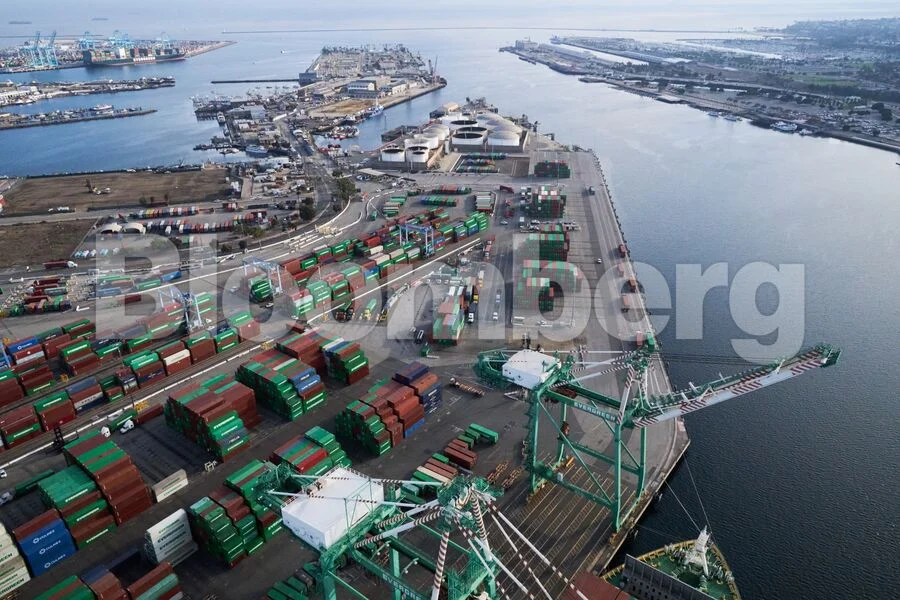
Contract negotiations between security workers at the twin Ports of Los Angeles and Long Beach and their employers have officially stalled, setting up what industry representatives describe as a real and immediate potential for a strike starting on Saturday. According to the group representing terminal operators and ocean carriers, the work stoppage could severely impact cargo operations across the nation’s busiest maritime trade gateway.
The breakdown in talks follows months of protracted discussions and multiple deadline extensions. The two sides had most recently approved a contract extension on Nov. 7, allowing ongoing negotiations between the International Longshore and Warehouse Union’s Local 26 chapter and the Pacific Maritime Association, the employer group, to continue in hopes of reaching a comprehensive agreement. However, those discussions abruptly concluded Tuesday. Representatives for the employer group stated that the meeting ended with little-to-no movement from the union regarding the association’s latest contract proposals.
The Pacific Maritime Association warned Wednesday that the union has indicated a firm unwillingness to extend the contract beyond its impending expiration at 12:01 a.m. on Saturday. This hard stance has set the stage for a potential strike at the nation’s largest and most economically vital port complex, raising alarm bells throughout the domestic and international supply chain.
The previous labor contract governing these security personnel expired back in July 2025. In the months since, the Federal Mediation and Conciliation Service has been actively assisting with negotiations between the employer group and ILWU Local 26, a specialized chapter representing approximately 250 security workers, watchmen, and allied personnel across the ports. The labor dispute escalated significantly last month after union members voted to authorize a strike, granting leadership the power to walk off the job if a satisfactory agreement could not be reached.
Representatives for ILWU Local 26 did not immediately reply to requests for comment regarding the collapse of Tuesday’s talks or the union’s final strike preparations.
The potential work stoppage carries implications that stretch far beyond the small group of direct contract negotiators. The Pacific Maritime Association has issued renewed warnings that ILWU dockworkers and marine clerks—who operate under separate labor contracts and are not direct parties to this specific dispute—are widely expected to stand in solidarity with the Local 26 watchmen in the event of a strike. If other major labor factions honor picket lines or refuse to cross them, terminal operations across the complex could grind to a near-total halt.
The scale of potential disruption is immense. According to data provided by the Pacific Maritime Association, disruptions at the affected terminals could directly impact roughly 85 percent of the cargo that moves through the Port of Long Beach, as well as approximately one-third of the cargo handled at the adjacent Port of Los Angeles.
These twin facilities have long served as the primary economic engine for trans-Pacific maritime trade, serving as the critical entry point for manufactured goods, retail products, agricultural exports, and industrial inputs moving between Asian manufacturing hubs and consumer markets across the United States. Just last month, the adjacent ports reported record-breaking cargo volumes, underscoring the heavy reliance that American supply chains place on their continuous, uninterrupted operation. Combined, the Ports of Los Angeles and Long Beach handle roughly one-third of the entire country’s seaborne containerized goods, making any sudden operational slowdown or labor stoppage an event of national economic significance.
As the midnight deadline approaches on Saturday, businesses, logistics providers, and supply chain analysts are closely monitoring developments at the Southern California harbors. With mediation efforts currently stalled and union leadership holding firm against further contract extensions, the coming hours will determine whether a disruptive labor conflict can be averted at the nation’s premier maritime gateway or if terminal operators and cargo owners must prepare to navigate the immediate fallout of a weekend strike.
| Source | : | Finance Poetry |
| Author | : | rifanmuazin |
| Editor | : | Finance Poetry Editorial Team |