
US Cybersecurity Chief Fired by White House Following Widespread Tech Outages
The White House has dismissed the United States’ top cybersecurity official and swiftly appointed a high-ranking Department of Defense official as a replacement. The sweeping leadership change comes just days after a wave of catastrophic, widespread technological outages crippled critical national infrastructure, throwing air travel, major banking institutions, and core national security systems into sudden and chaotic disarray.
Kirsten Davies, who has been serving as the chief information officer at the Department of Defense, was officially appointed on Thursday to take over the role. She replaces Sean Cairncross, who was reportedly sacked by the administration in the wake of the cascading technical failures. The abrupt transition underscores mounting pressures within the highest levels of government to address systemic vulnerabilities in the nation’s digital architecture, particularly as modern society becomes increasingly reliant on complex, interconnected technological networks.
President Donald Trump’s administration has faced intense, growing scrutiny over its handling of the multi-sectoral outages that struck Microsoft systems, the commercial aviation industry, and major financial institutions over a span of several days. The cumulative effect of these failures has laid bare the fragility of foundational digital systems upon which millions of citizens and businesses depend on a daily basis.
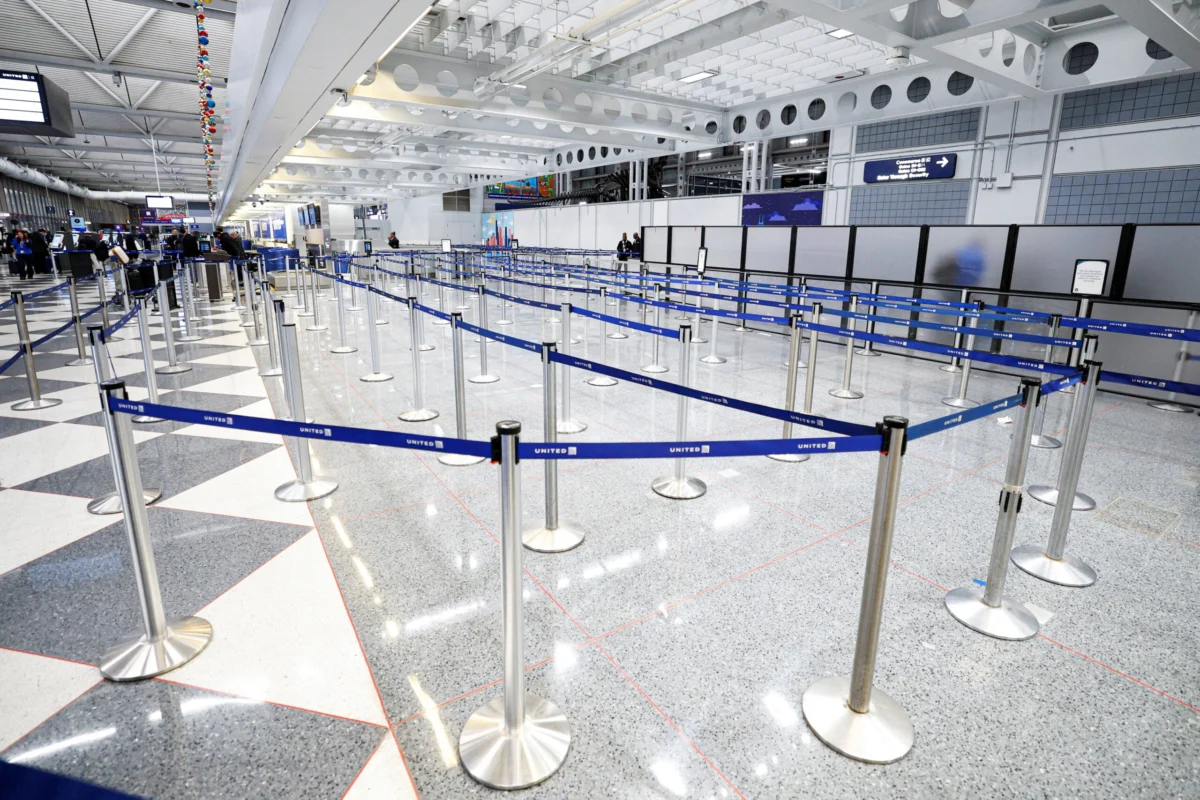
The crisis intensified late last week when a severe communications failure severely disrupted air traffic control systems across the United States. The sudden collapse of the network forced a nationwide ground stop, grounding all commercial flights across the country for approximately four hours and causing the cancellation of more than 10,000 flights. The cascading disruption left millions of passengers stranded at airports nationwide and is projected to have cost travellers more than $1.9bn in lost time, missed connections, and out-of-pocket expenses, according to an economic impact assessment by the Anderson Economic Group.
Almost concurrently, tech giant Microsoft issued formal apologies after a massive server failure triggered widespread outages that affected governments, corporate enterprises, and individual users around the world. The server crashes disrupted essential services, rendering email platforms and critical corporate websites inaccessible for extended periods and forcing organizations to scramble for manual workarounds.
The technological turbulence continued into this week when bank customers across the United States reported severe difficulties accessing their accounts online. Major financial institutions, most notably JPMorgan Chase, experienced significant technical issues that disrupted routine transactions and interfered with interbank fund transfers, leaving thousands of consumers unable to check balances or complete essential payments.
These compounding incidents have violently renewed national and international debates regarding the vulnerabilities inherent in critical infrastructure, the vast majority of which is entirely dependent on modern-day software, cloud computing, and automated networks. Security experts and lawmakers have long warned that systemic interconnectedness creates single points of failure that can be exploited or disrupted, whether through malicious intent or technical error.
Stepping into her new role amid this high-stakes environment, Kirsten Davies outlined an ambitious vision for the future of American digital defense in a widely circulated social media post following her appointment.
“Our nation stands in the crossroad of analog, digital, and quantum technologies, our American way of living increasingly interconnected,” Davies wrote.
Highlighting the strategic importance of the moment, she added, “Our opportunity is to dominate the cyber landscape for generations to come – but only if we modernise and drive resilience into the foundations our great nation runs on, as well as build cyber talent for our future. Under President Trump’s leadership we will have a more secure, resilient; and supercharged technological future.”
Despite initial fears that the unprecedented cascade of infrastructure failures might be the result of a coordinated foreign cyberattack or hostile state-sponsored sabotage, federal officials have moved quickly to tamp down speculation. Investigators and intelligence leaders have stated unequivocally that the nationwide outages were not caused by a malicious cyberattack or unauthorized network intrusion.
Shedding light on the probable root cause of the disruptions, Director of National Intelligence Jay Clayton revealed on Wednesday that the widespread technical failures were likely the result of major organisations implementing artificial intelligence tools to automate security fixes and execute routine maintenance updates. The unintended consequences of automated code deployment across vast digital ecosystems have raised fresh concerns over the safety and predictability of relying heavily on autonomous systems to manage critical infrastructure.
| Source | : | Finance Poetry |
| Author | : | rifanmuazin |
| Editor | : | Finance Poetry Editorial Team |