
Falling Home Prices Mask a Growing Crisis: Why Owning a House Is Costing More Than Ever
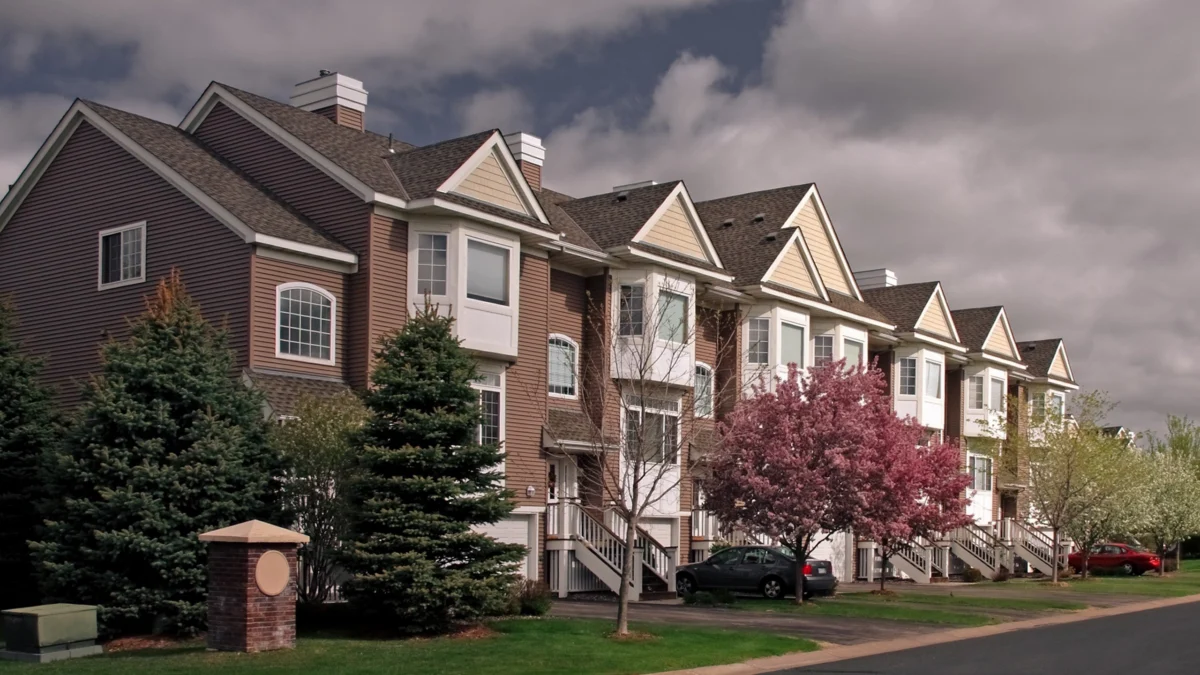
Homebuyers across the country are learning a harsh and expensive lesson: the purchase price of a house and the ongoing cost of living in it are two entirely different metrics. While prospective buyers might look at national housing reports and assume that a cooling market means relief for their monthly budgets, a deeper economic reality is quietly upending that assumption.
According to recent housing market data from Realtor.com, the national median listing price fell 1.4% year over year in September, marking the 11th consecutive month of annual price declines. In certain regions, such as the Northeast, the drops were even more pronounced, with prices sliding 3.8%. Under normal circumstances, a shrinking median price tag should offer much-needed breathing room for families trying to make the monthly financial math work in a high-interest-rate environment. However, real estate analysts emphasize that all else is rarely equal in today’s turbulent economic landscape.
Jiayi Xu, senior economist at Realtor.com, points out that the relief promised by falling home prices is frequently canceled out by auxiliary housing expenses. "Even if falling prices lower the monthly payment, that saving can be offset by rising costs such as insurance, HOA fees, and taxes," Xu explains. Among these compounding expenses, property insurance has emerged as a particularly aggressive financial pressure point, climbing at a pace that far outstrips broader inflation and wage growth.
Data from ICE Mortgage Technology reveals that the average single-family mortgage holder now pays a record $209 per month just for property insurance. That figure represents an 8.7% jump compared to the same period a year ago and an astonishing nearly 80% leap since 2020. Because lenders typically escrow these recurring costs directly into the monthly mortgage payment, insurance has become a critical and heavy component of overall housing affordability. Insurance alone now swallows 9.6% of the average mortgage holder’s monthly payment—a significant climb from a low of 7.2% in 2018. Alarmingly, many of the metropolitan housing markets where home prices are actively falling are simultaneously grappling with some of the steepest insurance premium increases in the country.
The Disconnect of Rising Premiums
The divergence between housing market values and insurance rates creates a difficult paradox for everyday buyers. Cameron Walker, who manages the agent network at Clever Real Estate, notes that while sticker prices are retreating, homeowner insurance costs are moving aggressively in the opposite direction and will continue to outpace any price cuts offered by sellers.
Historical data from ICE highlights how drastically the residential insurance landscape has transformed in a remarkably short span of time. In 2020, the average single-family mortgage holder paid $121 a month for property insurance. Just five years later, that financial burden had expanded by an additional $88 per month.
ICE utilizes a matched-pair methodology that tracks the exact same mortgage holder’s payment against what they paid a year prior. Through this metric, researchers found that annual insurance-cost growth peaked at a staggering 15.1% at the end of 2024. While the pace of growth has since cooled somewhat, costs were still up 8.7% year over year—a velocity that easily outpaces general consumer inflation and wage increases. In June, consumer prices were up 3.5% from a year earlier, while average hourly earnings rose by only about 3.4%.
When set against today’s modest home price declines, the rapid inflation of insurance premiums strips away much of the anticipated savings. The national median list price sat at $419,250 in September, which was down 1.4% from the previous year. For a typical buyer, that translates to a price discount of roughly $6,000 on the purchase. For a purchaser putting down 20% and securing a 30-year mortgage at an interest rate of 7.3%, that lower sticker price trims the combined principal and interest by a meager $33 a month. Meanwhile, based on ICE’s latest measurements, the average property insurance payment rose by about $17 a month—effectively eating away roughly half of the savings generated by the lower purchase price.
Regional Burdens and Climate Realities
National averages often mask the severe financial shocks occurring at the local and state levels. Minnesota provides a striking example of this localized volatility. According to a recent report from the insurance comparison platform Insurify, the average annual home insurance premium in Minnesota surged 12.9%—or $457—in just the first half of the year, bringing the statewide average to $3,987. This jump, which represents the largest percentage increase of any state in the country, has been heavily driven by escalating risks associated with severe thunderstorms, hail, and tornadoes.
Insurify data indicates that nearly 1,900 counties across the United States saw home insurance costs increase during the first half of the year, including more than 130 counties where premiums spiked by double digits. In many cases, these substantial increases are occurring in housing markets where asking prices are moving in the opposite direction.
In Minneapolis, for instance, the median list price fell 4.1% year over year in September. At the same time, ICE data shows that the average property insurance payment among local mortgage holders rose by 13.1%. Looking closer at the county level reveals an even steeper climb. Insurify estimates that in Hennepin County, which encompasses Minneapolis, the average annual premium jumped by 20.9%—equating to an increase of $784—in just six months, pushing the average to $4,545. Industry analysts point to the region’s heightened exposure to severe weather, including hail, tornadoes, and high winds, as the primary driver behind the pressure.
A similar pattern is visible in California markets. In Sacramento, median list prices dropped by 2.6% while insurance payments climbed 12.5%. In San Diego, prices fell 6.3% while insurance costs grew by 12.4%.
Even in states with a long-standing reputation for exorbitant insurance costs, the trajectory can vary wildly from one community to the next. Florida remains the most expensive state in the nation for homeowners insurance, with Insurify estimating an average annual premium of $8,486. However, statewide premiums rose at a comparatively modest 2.3% during the first half of the year as parts of the local insurance market showed signs of stabilization.
Yet zooming in on specific coastal or vulnerable pockets tells a completely different story. In Collier County, Florida, Insurify estimates that the average annual premium jumped by 25.3%—a staggering $2,028 increase—in just six months, pushing the local average to $10,052. This dramatic degree of variation demonstrates why a falling median home price fails to provide a clear picture of how much more affordable a particular property has actually become.
The Structural Disconnect Between Price and Protection
The reality that falling home prices do not automatically translate to cheaper monthly payments exposes a fundamental difference in how real estate buyers and insurance underwriters evaluate property value. A home’s market sale price reflects what purchasers are willing and able to pay based on local demand, neighborhood desirability, and the value of the underlying land. Homeowners insurance, on the other hand, is entirely unconcerned with land value or market demand; instead, it focuses on the cost to repair or rebuild the physical structure and the statistical likelihood that an insurer will have to pay out a claim.
"A lower sale price doesn’t mean a lower cost to insure the home," explains Milad Morgan, an insurance broker at Atlas Risk Partners. He notes that insurance policy limits strictly reflect rebuilding costs, whereas a transaction price captures broader macroeconomic and localized factors.
This structural disconnect is particularly acute in regions exposed to environmental and climate risks. Because insurance premiums are driven primarily by climate hazards and rebuilding expenses, they do not drop proportionally when real estate values decline. Jiayi Xu points to research from Realtor.com’s climate risk reports, which consistently shows that insurance costs weigh most heavily on lower-value, high-risk housing markets, particularly across Gulf Coast and southeastern states like Louisiana and Florida. In these vulnerable regions, soaring insurance expenses rapidly erode the affordability gains that buyers would otherwise secure from falling home prices.
The financial strain is already registering heavily among property owners. According to data from the Federal Reserve, 14% of insured homeowners struggled to afford their insurance premiums, while 20% reported that they wanted to purchase more coverage but simply could not afford the added expense. Furthermore, more than six in ten homeowners stated that their insurance costs had risen by a greater margin than anticipated in recent years.
For individuals navigating today’s housing market, these pressures make securing an accurate insurance quote a critical preliminary step rather than an afterthought. Cameron Walker advises his clients to gather insurance estimates before ever submitting an offer on a house. He also encourages buyers to thoroughly investigate a property’s claims history, the age of its roof, and its specific exposure to environmental hazards like flooding or wildfires, allowing them to construct a realistic budget that accounts for the true total monthly cost of ownership.
"An unexpected high insurance quote can substantially increase the monthly cost of homeownership," Walker says. "I’d rather a buyer learn that in week one than in week four."
| Source | : | Finance Poetry |
| Author | : | rifanmuazin |
| Editor | : | Finance Poetry Editorial Team |