
Financial Sector Struck by Third-Party Data Breach Linked to N0n Ransomware Group
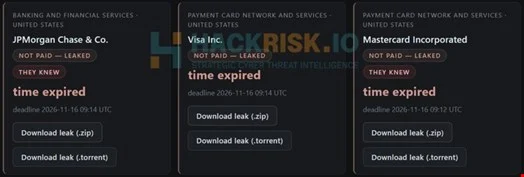
JPMorgan Chase, the world’s largest investment banking institution, has officially confirmed that it has been the victim of a data breach stemming from a sophisticated cyber-attack targeting its third-party vendor ecosystem. The incident, which has sent shockwaves through the financial services industry, also impacted global payments giants Visa and Mastercard, exposing the inherent risks associated with the complex web of external service providers that modern financial institutions rely upon to function.
The breach came to light following a series of claims made by the N0n ransomware syndicate. On November 19, JPMorganChase utilized its official account on the social media platform X to address the unfolding situation. The bank informed its massive global customer base that it had identified unauthorized access to specific marketing data held by third-party vendors. According to the firm’s statement, the compromised information appears to be limited in scope, potentially involving customer names and email addresses.
"There is no disruption to our services," the bank stated in its public notification. "Where appropriate, we will contact affected customers directly and offer support, including complimentary credit monitoring." The institution was quick to differentiate this security incident from a separate technical issue that occurred on November 16, which the bank attributed to a routine software bug within its internal, on-premise hardware systems, rather than any external malicious activity.
The consumer and retail banking arm of the conglomerate, Chase, mirrored these assurances shortly thereafter, issuing an identical statement to provide clarity and maintain transparency for its millions of retail clients. Despite these efforts to calm the market and the public, the broader context of the breach remains deeply concerning due to the involvement of the N0n ransomware group, an emerging threat actor that has recently escalated its activities against high-profile targets.
The N0n Ransomware Syndicate and the Financial Sector
The breach notifications from JPMorgan, Visa, and Mastercard were precipitated by the N0n group’s decision to publish the names of these three financial titans on its dedicated data leak site. The group, which first emerged on the cybersecurity threat landscape in September 2026, has quickly gained a reputation for aggressive extortion tactics. Among its more alarming methodologies is the explicit threat to destroy a victim’s backup infrastructure—a move designed to render data recovery impossible and increase pressure on organizations to meet their ransom demands.
Reports indicate that the N0n group publicly released data belonging to customers of all three financial institutions, claiming that each organization had failed to meet a 48-hour deadline to pay an undisclosed extortion fee. While the banks have been measured in their public disclosures, the scale of the incident is underscored by the involvement of other industry leaders.

Visa confirmed that it had indeed experienced a data breach resulting from a compromise at a third-party vendor. However, the company emphasized that its own core payment systems remained secure, and no sensitive payment card data—such as primary account numbers or CVV codes—had been impacted. Similarly, a spokesperson for Mastercard acknowledged that its systems were not directly breached. Instead, the company revealed that the incident affected non-payment information associated with a small subset of cardholders who were enrolled in a specific, third-party managed benefit program.
At this stage, none of the third-party vendors involved in the breaches have been publicly identified by the banks or the attackers. This lack of attribution makes it difficult for security researchers to determine if the incidents are the result of a single, coordinated campaign against a common vendor or a series of independent attacks that the N0n group has opportunistically bundled together to enhance its own notoriety.
Scope of the Exposure and Expert Analysis
Investigations into the leaked data have begun to paint a clearer picture of the incident’s real-world impact. According to reports from the Wall Street Journal, the information leaked by the attackers includes personal data belonging to thousands of customers across the three financial organizations. One of the more significant revelations involves the exposure of approximately 16,000 email addresses linked to JPMorgan’s invitation-only Reserve card program. This elite tier of service is typically reserved for the bank’s most high-net-worth clients—individuals with $10 million or more in managed assets—making them potentially lucrative targets for sophisticated phishing campaigns, social engineering, or targeted fraud.
Industry experts are now urging a cautious interpretation of the threat posed by the N0n group. Rafe Pilling, senior director of threat intelligence at the Sophos Counter Threat Unit, noted that while the group is clearly having a "real impact" on the organizations it targets, their claims regarding major global brands should be viewed with a degree of skepticism.
"In several cases, the data appears to have come from third-party providers running marketing, loyalty, or concierge programs, rather than from the brands’ own networks," Pilling explained. "That still matters to the individuals whose data has been exposed, but it’s very different from saying criminals have broken into Visa or JPMorgan and are moving around inside their systems."
Pilling’s analysis highlights a critical tension in modern cybersecurity: the distinction between a direct breach of a financial institution’s fortified infrastructure and a breach of the sprawling, often less-secure ecosystem of vendors that support them. While the latter is no less of a headache for the institutions involved—carrying significant reputational risk and regulatory burdens—it reflects a strategic shift by ransomware groups toward "soft targets" that nonetheless hold valuable customer information.

The Challenge of Third-Party Risk Management
The incident involving JPMorgan, Visa, and Mastercard serves as a stark reminder of the challenges posed by third-party risk management in the financial sector. Banks are increasingly dependent on a vast array of specialized vendors for services ranging from cloud storage and data analytics to loyalty rewards and concierge management. While these partnerships drive innovation and efficiency, they also broaden the attack surface of the financial institution itself.
For the N0n group, targeting these third parties is a logical strategy. By compromising a single vendor that services multiple high-profile clients, an attacker can potentially gain access to sensitive data from several major corporations simultaneously, maximizing the leverage they can apply during the extortion phase. The 48-hour deadline imposed by N0n is a clear indicator of the group’s intent to force rapid decision-making, aiming to capitalize on the fear and urgency that such a leak creates for brand reputation.
As the situation develops, the financial institutions involved are likely to face intensified scrutiny from regulators regarding their vendor due diligence processes. The incident underscores that security is only as strong as the weakest link in the supply chain. For the thousands of customers whose email addresses have been exposed, the immediate threat is not necessarily the loss of funds from their accounts, but rather the increased likelihood of being targeted by sophisticated phishing or "spear-phishing" attacks. Attackers who know that a specific individual is a high-net-worth client of a prestigious bank can craft highly personalized and convincing fraudulent communications to trick them into revealing further information or authorizing unauthorized transactions.
The N0n group’s reliance on the threat of destroying backup infrastructure further complicates the response. It signals a move toward more destructive and permanent extortion tactics, shifting the burden onto the victims to decide between paying a ransom or suffering the total loss of potentially critical data. As businesses worldwide continue to navigate the aftermath of this incident, the case will likely serve as a foundational study in how major corporations must balance their need for external partnerships with the imperative of maintaining absolute data security. For now, the affected banks remain in damage control mode, focusing on notifying the victims and reinforcing the security posture of their third-party networks to prevent a recurrence of this high-profile breach.
| Source | : | Finance Poetry |
| Author | : | rifanmuazin |
| Editor | : | Finance Poetry Editorial Team |