
Taiwan Weighs Return to Nuclear Power Amid Surging AI Demand and Geopolitical Tensions
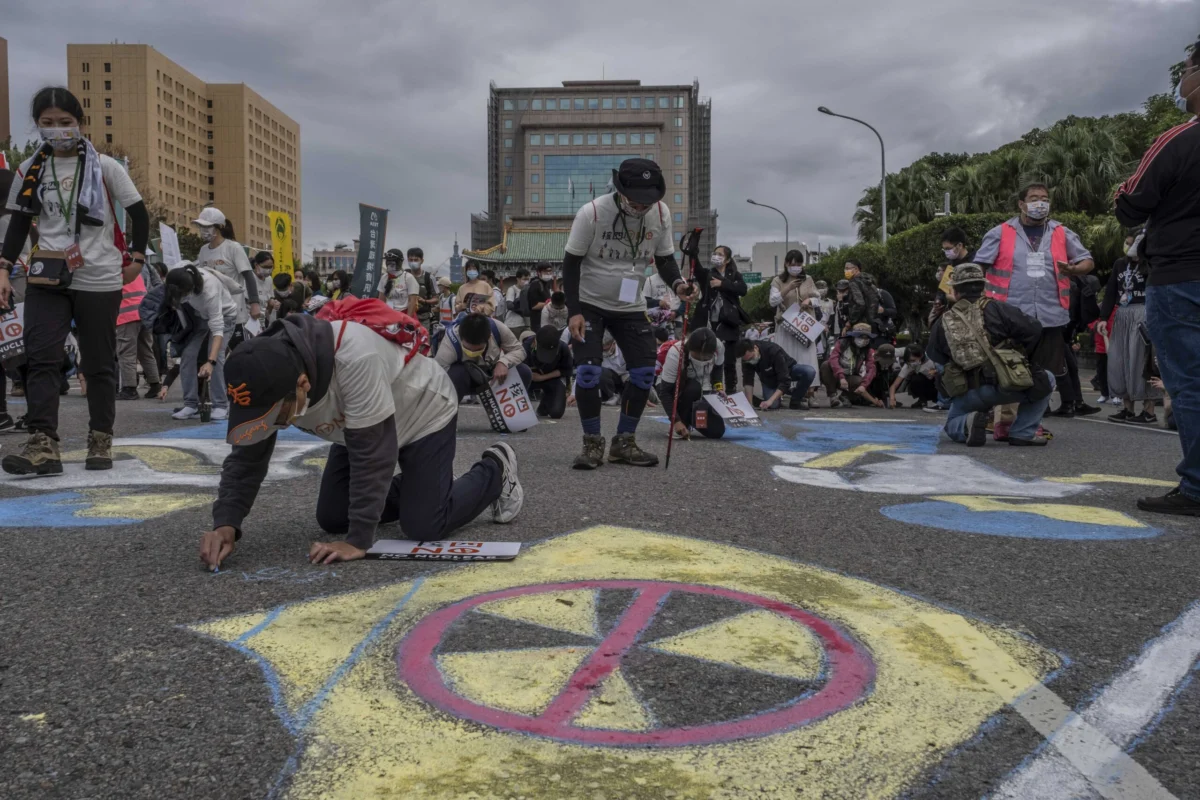
Voters across Taiwan are heading to the polls on Saturday to decide whether the island should revive its dormant nuclear energy program. The high-stakes referendum, held alongside local elections, comes just 18 months after Taiwan shut down its final operational nuclear reactor, marking a pivotal moment in the island’s energy and political landscape.
The vote represents Taiwan’s fourth referendum on nuclear power in the span of just eight years, highlighting a deeply polarized and recurring debate over how the self-governing island powers its economy. This time, however, the discussion is unfolding against the backdrop of an unprecedented surge in electricity demand driven by a booming artificial intelligence and computer chip sector, alongside mounting anxieties regarding national security and energy vulnerability in the face of escalating tensions with Beijing.
What is the Referendum About?
The core question facing voters on Saturday is whether the government should abandon its longstanding "nuclear-free homeland" policy and return to nuclear energy to bolster the economy and stabilize the power grid.
The referendum was originally proposed by the opposition Kuomintang (KMT) and has also garnered staunch backing from the Taiwan People’s Party (TPP). After moving through the legislative process, the Central Election Commission officially cleared the measure for the ballot. For the referendum to pass, "yes" votes must outnumber "no" votes while also clearing a statutory threshold of surpassing a quarter of all eligible voters.
Meanwhile, the ruling Democratic Progressive Party (DPP), which has historically anchored its platform in a nuclear-free mandate, is actively urging the electorate to cast "no" votes. DPP lawmakers, such as Chen Pei-yu, have argued that the referendum is fundamentally unnecessary, maintaining that policymakers have the authority to alter the energy trajectory through standard legislative amendments rather than a nationwide ballot.
Why Did Taiwan Give Up Nuclear Power?
Decades ago, Taiwan relied heavily on atomic energy to fuel its rapid industrialization. By 1985, the island’s three active nuclear plants accounted for an impressive 52 percent of its total electricity generation.
Over time, however, nuclear energy transformed into one of the most fiercely partisan flashpoints in Taiwanese politics. According to Lev Nachman, an assistant professor at the Graduate Institute of National Development at National Taiwan University, this political divide traces its roots directly back to the founding of the DPP.
A significant faction within the early DPP coalition consisted of dedicated environmentalists holding strong anti-nuclear positions, whereas the nuclear sector itself had been established and administered under KMT rule. This historical context cemented the issue into what Nachman describes as a classic "green-versus-blue" political battle, referencing the respective colors of the two major parties.
Beyond partisan politics, public safety concerns remain profound. Nachman notes that Taiwan monitored the 2011 Fukushima nuclear plant meltdown in neighboring Japan with acute anxiety, embedding a widespread fear that any nuclear accident could devastate the densely populated island. These concerns are compounded by geographic realities, as active geological fault lines traverse the territory, and the long-term challenge of safely disposing of nuclear waste remains a persistent domestic hurdle.
The DPP capitalized on these sentiments, governing since 2016 partly on a firm pledge to completely phase out nuclear power. This policy culminated in May of last year when the final reactor at the Maanshan plant in Pingtung County was officially powered down.
Why is Nuclear Power Back on the Agenda?
Public opinion on the matter has historically fluctuated, as evidenced by three prior referendums. In 2018, voters chose to scrap a legal deadline that mandated the complete phase-out of nuclear energy. Yet, just three years later, in 2021, the electorate rejected a proposal to restart construction on a controversial and unfinished fourth nuclear plant. In August of last year, a majority of voters supported restarting the Maanshan facility, but the result was ultimately voided due to low voter turnout.
Today, nuclear power has re-entered the national conversation driven by a potent mix of soaring industrial power demands and heightened energy security fears. Taiwan’s Ministry of Economic Affairs reports that the island imports more than 97 percent of its total energy supplies. Natural gas currently accounts for approximately 43 percent of electricity generation, while coal contributes roughly 35 percent—with both commodities transported to the island by maritime shipping vessels.
Furthermore, Taiwan maintains a very narrow buffer, holding only about 11 days of liquefied natural gas (LNG) in reserve, compared to the 14 to 20 days maintained by neighbors like Japan and South Korea. Disruptions to global shipping routes, including recent complications affecting LNG shipments from the Middle East, have only intensified these vulnerabilities.
According to Nachman, the renewed push involves two distinct priorities. The first is fundamental energy security. If geopolitical friction were to escalate into a Chinese blockade cutting off external access, Taiwan would find itself severely limited in the energy resources it could access locally. The second priority is the insatiable power requirement of the island’s foundational technology sectors, which continues to expand unchecked.
Will the Ruling Party Change Its Stance?
Despite its historical opposition, the DPP administration has already begun signaling a pragmatic shift. In March, President William Lai Ching-te indicated that the government would initiate the necessary procedures to explore restarting the Maanshan and Kuosheng plants, pointing explicitly to AI-driven consumption and foreign conflicts disrupting global energy supply chains.
By late September, the Nuclear Safety Commission approved a restart plan submitted by state-owned utility Taipower for the Maanshan facility, though the plant still faces rigorous secondary safety evaluations before it can resume operations.
Nachman observes that President Lai has been nudging his political base to reconsider what he terms a "very dogmatic anti-nuclear stance." However, the critical uncertainty on Saturday is whether the wider base of DPP voters has shifted along with the leadership. Even so, nuclear energy is viewed primarily as a supplementary measure rather than an immediate primary strategy. Investment in LNG infrastructure remains the government’s foremost priority for bridging the energy gap.
How Important is Taiwan’s Microchip Industry?
At the heart of Taiwan’s exploding electricity consumption is its irreplaceable role in the global technology supply chain. The island produces more than 90 percent of the world’s most advanced semiconductors, with the vast majority manufactured by the Taiwan Semiconductor Manufacturing Company (TSMC), which commands over 60 percent of the global contract chipmaking market.
TSMC manufactures advanced processors for major global tech giants, including Nvidia, AMD, and Apple, producing critical components like Nvidia’s Blackwell and Rubin AI processors. Meanwhile, other Taiwanese heavyweights such as Foxconn and Quanta construct the majority of the world’s physical AI servers.
This immense technological output demands staggering amounts of water and electricity. In September, the semiconductor sector crossed a threshold by consuming more than 4.5 billion kilowatt-hours of electricity in a single month—an 11.55 percent increase compared to the previous year, fueled almost entirely by the artificial intelligence boom. S&P Global estimated that TSMC alone utilized roughly 8 percent of Taiwan’s total electricity output in 2023, a share projected to surge toward nearly 24 percent by 2030.
Nevertheless, analysts caution against viewing the referendum solely through the lens of microchip manufacturing. While tech industry demands dominate international media coverage, many local residents view the debate primarily through the broader, more immediate lens of national defense and emergency preparedness.
Will China Object to Taiwan Having Nuclear Power?
Beijing has not issued direct commentary regarding the specifics of Taiwan’s domestic nuclear referendum, treating the matter largely as an internal political discussion. However, Beijing has frequently weaponized Taiwan’s energy vulnerabilities in its political messaging. Earlier this year, officials from China’s Taiwan Affairs Office suggested that closer cross-strait integration could help resolve Taiwan’s heavy reliance on imported Middle Eastern fossil fuels—an overture that Taipei promptly rejected as a political maneuver.
Meanwhile, unification remains a stated strategic objective for Beijing, with Chinese leadership repeatedly emphasizing the goal. Observers note that the current referendum strictly concerns civilian power generation rather than military capabilities. Taiwan famously pursued a clandestine nuclear weapons program in the 1970s and 1980s, but that initiative was dismantled in 1988 following US intervention and the defection of a key scientist. Since then, Taipei has consistently maintained that it will not pursue nuclear weaponry, with its facilities subject to international oversight and inspections.
The primary geopolitical concern for Taiwan remains the threat of a maritime blockade or naval quarantine. Large-scale military drills and patrols conducted by China in recent years have frequently practiced maneuvers designed to simulate the isolation of the island.
Will the Referendum Pass and What Happens Next?
Political analysts remain cautious regarding the likely outcome of Saturday’s vote. Given the history of previous referendums failing to secure sufficient momentum or voter turnout, expectations for a decisive "yes" victory remain measured. The ultimate result will hinge heavily on whether traditional green voters cross party lines to support the energy shift.
Should the measure pass, President Lai and the DPP leadership are expected to accommodate the outcome, particularly as preliminary technical evaluations for plant restarts are already underway. While nuclear advocates argue that reactivated reactors could be supplying power within 18 months to three years, opponents caution that safety overhauls could take up to a decade and require hundreds of billions of New Taiwan dollars.
Polls close on Saturday evening, with election officials expected to release the final results later that night.
| Source | : | Finance Poetry |
| Author | : | rifanmuazin |
| Editor | : | Finance Poetry Editorial Team |