
Silicon Valley Navigates the White House Mandate: Tech Giants Split Over Trump’s Push to Replace ‘AI’ with ‘Super Intelligence’
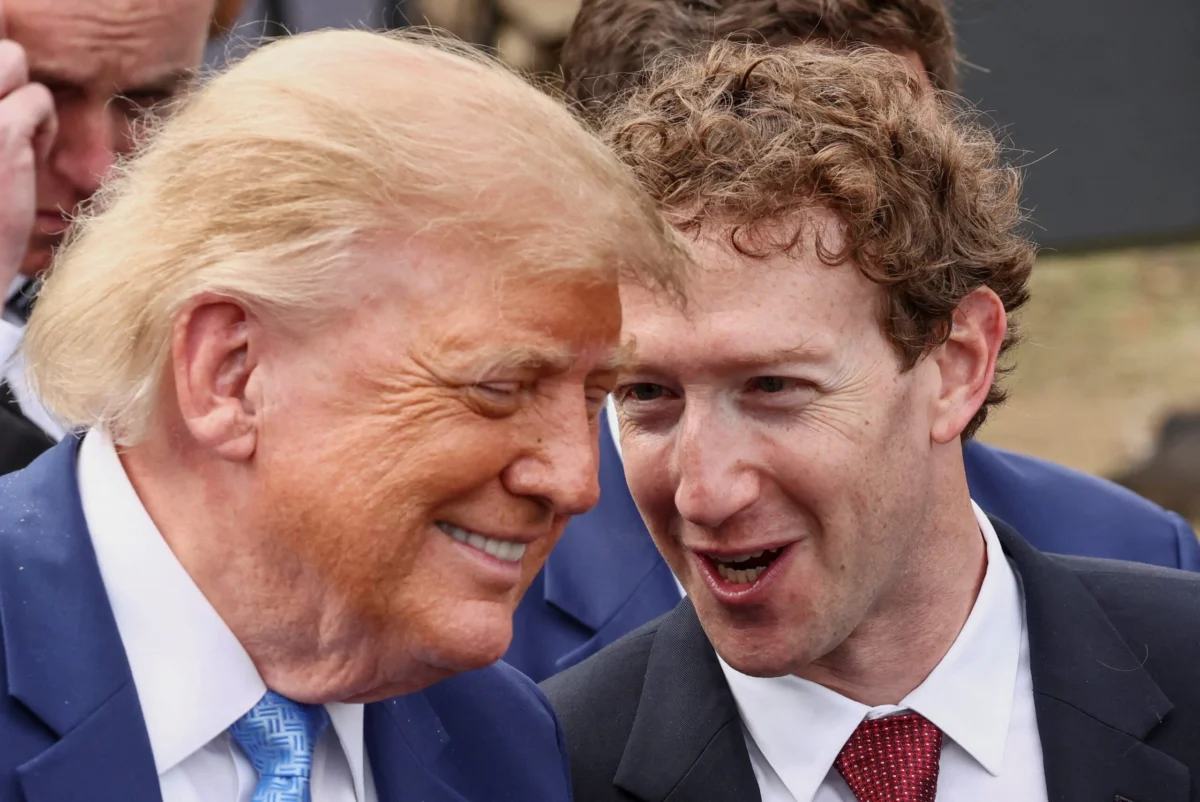
WASHINGTON — A month after President Donald Trump formally ordered executive branch departments and agencies to replace the term "artificial intelligence" with "super intelligence," the policy has triggered a nuanced linguistic divide across the technology sector. While prominent tech billionaires and close presidential allies like Elon Musk and Mark Zuckerberg have swiftly aligned with the administration’s new vocabulary on corporate earnings calls, other industry leaders have proven far more reluctant to abandon the globally recognized acronym entirely.
The administration’s ongoing push dates back to Sept. 29, when President Trump hosted an exclusive artificial intelligence luncheon for major industry leaders in the East Room of the White House. During the gathering, the president emphasized his administration’s commitment to fostering the growth of the technology within the United States while pursuing a framework of limited federal regulations. Following that high-profile meeting, Trump took to Truth Social to announce a broader linguistic mandate, vowing to ban the use of "AI" or "artificial intelligence" entirely in "all relevant documents" and across all other official federal contexts.
This executive pressure has since spilled over into corporate boardrooms, particularly among companies helmed by Trump’s most vocal supporters in Silicon Valley. Last week, leadership at SpaceX and Tesla adhered closely to the administration’s preference during their respective quarterly earnings calls. The shift followed moves made earlier in October by Musk, who officially rebranded the artificial intelligence division of his private rocket company, SpaceX, to SpaceXSI. Speaking during Tesla’s third-quarter earnings call to discuss the ongoing development of humanoid robotics, Musk adopted the updated terminology, noting that while some of the prototypes look impressive, "they’re not really using any kind of advanced AI or SI."
Mark Zuckerberg demonstrated a similar level of compliance during Meta’s third-quarter earnings call on Oct. 21. Rather than resisting the federal directive, Zuckerberg leaned directly into the terminology, emphasizing his company’s overarching "goal of delivering personal superintelligence to everyone." Meta’s adoption of the framing is hardly new, however; the social media giant had already established an internal unit titled Meta Superintelligence Labs nearly a year prior.
While Musk and Zuckerberg represent some of the most visible and fiercest supporters of the current administration among tech executives, their willingness to adopt the terminology does not make them isolated examples within the broader corporate landscape. Leaders across virtually all major technology conglomerates have previously contributed to Trump’s inauguration festivities or his broader plans for the upcoming White House ballroom renovation. Several have also actively dismantled diversity, equity, and inclusion, or DEI, programs that had previously faced sharp criticism from the president and his allies.

Yet, despite these broader political alignments, corporate executives have largely drawn a hard line when it comes to purging the term "AI" from their immediate operational lexicon.
During Amazon’s third-quarter earnings call, CEO Andy Jassy relied heavily on the conventional terminology, using the acronym "AI" well over a dozen times during his introductory remarks alone. Similarly, Microsoft CEO Satya Nadella told investors and analysts on the company’s earnings call that one of the tech giant’s three core strategic points of focus remains "designing AI to empower people." Alphabet and Google CEO Sundar Pichai followed a comparable path, opening his quarterly commentary by noting that the search giant’s ongoing "AI investments are driving increased usage and overall user growth."
The timing of the administration’s attempted rebranding effort coincides closely with the upcoming midterm elections, a political landscape where the Republican Party faces potential challenges in retaining control of both the House and the Senate. Recent polling data underscores a tightening political environment, as President Trump’s overall job approval rating has seen a downward trend, while his specific economic approval rating hit an all-time low in a CNBC All-America Economic Survey released just prior to the earnings reports.
‘Real-world outcomes’
Despite the continued reliance on the term "AI" by several major executives during their earnings updates, industry analysts caution that this should not be interpreted as open defiance of the White House. The administration’s preferred vocabulary has begun seeping organically into broader corporate correspondence, regulatory filings, and shareholder communications.
Microsoft’s annual report, filed with regulators, notably featured eight distinct mentions of "super intelligence," appearing prominently near the beginning of the executive letter addressed to shareholders.

"For Microsoft, the central question as we enter this Super Intelligence era is not just how big the opportunity becomes, but how we deliver the real-world outcomes that every country, community, and company demands and deserves," Nadella wrote in the report.
Other major enterprise technology leaders have also begun blending the terminology. IBM CEO Arvind Krishna, who did not attend the White House luncheon in September, utilized the acronym "SI" alongside "AI" during his company’s quarterly earnings presentation. Krishna told investors that "technology innovation in both hybrid infrastructure and super intelligence is leading to better business performance," while emphasizing that IBM continues to advance as a "software-led hybrid cloud and AI platform company."
Similarly, Intel CEO Lip-Bu Tan addressed the persistent supply chain constraints facing the semiconductor manufacturing industry, noting on a conference call that the current market shortage has been "driven by the unprecedented demand for super intelligence."
Other prominent voices across the technology sector have been explicit in their endorsement of the administration’s preferred nomenclature ahead of upcoming corporate reporting cycles. Palo Alto Networks CEO Nikesh Arora repeatedly highlighted the term "SI" during appearances on CNBC and took to social media to celebrate the administration’s approach, writing on X that "the meeting at the WH on SI was an epic moment."
Meanwhile, Nvidia CEO Jensen Huang, who oversees the world’s most valuable publicly traded chipmaker and has served as a primary architect of the hardware boom powering modern computing models, has emerged as one of the president’s top allies on the national technology stage, particularly concerning debates over safety and scaling. Following last month’s summit at the White House, Huang publicly praised what he termed the "White House Accord on Super Intelligence."
"Super Intelligence offers an extraordinary opportunity to advance discovery, productivity, security, health, and prosperity," Huang wrote in a statement published online. "The future of Super Intelligence will be shaped not only by what it can do, but by the confidence it earns."
| Source | : | Finance Poetry |
| Author | : | rifanmuazin |
| Editor | : | Finance Poetry Editorial Team |